Wednesday, October 14, 2020

Wild and Free Food - Greens Soup

I made a small batch of soup early last week.  It is delicious, but not terribly photogenic!

It lasted through 3 meals, which is plenty for me, but if you have a family to cook for, this recipe is very flexible, so double or triple it for your crowd.  If you're interested in learning more about wild foods and how to get them onto the table, this recipe is almost foolproof and so delicious that it will please a lot of people who wouldn't normally *voluntarily* eat weeds. You might also want to check out our book - Wild Foods for Every Table.

This particular pot of soup contained a couple of cheats.  Sometimes the plants show up when we haven't prepared.  I used bouillon and instant potatoes for the base.  You may certainly use the real thing instead!  This was a spur of the moment, thrown together thing - which is part of the beauty of food just coming up out of the ground, unbidden!
 
Potatoes are rarely in the house, and a $1 bag of instant can last a month or two because it's only used in soups.  There is NEVER enough broth around here.  The soup was spectacular.  Here we go...
Starting on the left, chickweed, cheese, mushrooms, nettles, and wild onions down the center.
Ingredients:
1 quart stinging nettles
2 cups chickweed
3 or 4 wild onions
1 pint mushrooms (any kind)
1/2 cup Parmesan cheese
1 large bouillon cube - chicken or vegetable
1/2 cup instant mashed potatoes
Splash of olive oil
6 cups water

First, a walk around the yard,  The nettles are up about 3 or 4 inches, and are growing thickly.  It took no time to gather a quart of them.  No onions in the house, so I grabbed a few wild onions/garlic.
stinging nettles
~Inside, rinse the greens, pick through them, and then chop them up a bit with kitchen shears. 
~Peel the onions and chop finely.
~Put oil into a 2 qt pan, and LIGHTLY saute the onions. Add mushrooms.
~If needed, use a little more oil.
~Add 2 cups water with the bouillon when the mushrooms are a releasing some liquid and softening. Heat on medium high until it starts to simmer.  In the meantime...
~Mix the instant potatoes into remaining quart of water and pour into the pan.
~When it starts heating up, dump in the greens.
~As soon as the broth starts a light boil and the greens soften, use an immersion blender until most (but not all) of the mushrooms and greens are blended.  If you don't have an immersion blender, put about 1/2 of the soup into a blender until smooth.
~Add the cheese and stir.  Use additional cheese as a garnish. 
~I had some leftover chicken that went in at the end.  Croutons would be delicious too.
Chickweed (about 4x life size)
All in all, this was probably 1/2 an hour from yard to table, and it was really good. 
There were a couple other greens out today.  In the next month or so, the selections will be too many to list.
Hairy Bittercress

Ground Ivy (among many names)
Red Dead Nettle
All of these can be used, as well as garlic mustard, plantain, daylily leaves, dandelion leaves, violet leaves, clover, and on and on...  You CAN even use domesticated vegetables, if you like :-)

Wild and Free Food - Pestos

Pestos add flavor and nutrients to things like pasta, potatoes, rice, beans, or even soups and stews.

When you think of pesto, it is usually the flavor that comes to mind.  Maybe after that, you think about how easy it is to whip up a last minute meal without heating up the kitchen in the summer.  We mostly think about Basil, but many other herbs can be used.  Rarely do most of us think about the immense health benefits derived from these herb pastes, but we really should.  It can go on pasta, you can slather it on a sandwich, add a dollop to soups, or use it as dip.  Pesto is an easy food to eat in a lot of different ways.

Earlier this year, I was trying to think of pleasant ways to eat more raw garlic during cold and flu season.  This is really a subject that has confounded me for many years since garlic was not a typical ingredient in the PA German fare of my childhood.  It is an ingredient that I at first struggled to acquire a taste for and eventually came to enjoy.  Still, eating raw garlic is one of the simplest ways to kick a virus, and when I realized that pesto was not cooked, it was a revelation for me.

Here are some of the reasons that pesto is more than just a sauce:

Garlic

- Incredible healing powers that help to prevent influenza, colds, yeasts and fungus and contains antiseptic, antibiotic, antiviral, bactericidal, and anti-inflammatory properties.  After watching my daughter go through over a week of the nasty, wheezing, upper respiratory virus this winter (after refusing all offers of my herbal concoctions), naturally, I started coming down with it.  Over the course of a day and a half, I ate about 2 full bulbs of garlic and was quickly on the mend.  You could smell me coming, but at least I wasn't sick.

Basil

- All of the culinary basils (and of course holy basil as well) work hard against inflammation. Basil is rich in anti-oxidants that combat aging and support the immune system and can combat stress, help with upper respiratory illnesses, battle headaches, or calm the stomach and improve digestion.   

Walnuts (who can afford pine nuts anymore?) - Walnuts contain both monounsaturated fatty acids and Omega 3 essential fatty acids to promote healthier arteries and cholesterol levels, helping to possibly prevent strokes and heart disease.  They contain very high levels of antioxidants and are packed with the B Complex vitamins, tons of beneficial minerals, and vitamin E.


Olive Oil - Bolsters immune system and helps to fight viruses.  Consuming olive oil mproves bone mineralization and calcification. It helps calcium absorption.  There are many long term benefits to olive oil.

Many other herbs can be blended into pastes.  They don't have to be single, they can be blends like Basil and Chickweed, Sage and Nettles, etc., but do consider some of these benefits:

Thyme

Thyme is a rich source of nutrition, even in small quantities.  It is a treasure trove of vitamins C, B6, K, and A, riboflavin, iron, copper, manganese, calcium, folate, phosphorus, potassium, and zinc.  One compound, Thymol is one of a naturally-occurring class of compounds known as biocides that can destroy harmful organisms like bacteria, microbes, and viruses. Combined with other biocides, such as carvacolo (also in thyme), it has strong antimicrobial power and displays significant anti-oxidant protection of cellular membranes.  

Sage

- Sage is an amazing source of several B-complex vitamins, including folic acid, thiamin, pyridoxine and riboflavin.  Lots of the vitamins C and A, plus minerals like potassium, zinc, calcium, iron, manganese, copper, and magnesium.  Highly anti-inflammatory, sage is a powerful herb for people with conditions caused by or worsened by inflammation such as rheumatoid arthritis, asthma, and atherosclerosis.

Chickweed

Packed with vitamins and minerals like iron, calcium, magnesium, manganese, silicon, zinc, phosphorus, potassium, protein sodium, copper, carotenes, and vitamins B and C, chickweed also has saponins that help with joint inflammation.  

Nettles 

Contain
tannic acid, lecithin, chlorophyll, iron, silica, potassium, phosphorus, sulfur, sodium, and vitamins A and C.  Some of the talents Nettles bring to the table include being diuretic, astringent, pectoral, anodyne, tonic, styptic, nutritive, anti-rheumatic, anti-allergenic, decongestant, expectorant, anti-spasmodic, and anti-histamine, herpetic, galactagogue, and an anti-histamine. Grinding the herb to paste takes the sting away without destroying the valuable components.


Violet Leaves 

There are lots of vital minerals, especially calcium and magnesium available in the leaves.  The leaves and flowers contain Rutin, a bioflavonoid that is helpful in the treatment of venous insufficiency and lowered blood flow to various parts of the body.  Specifically, hemorrhoids and varicose veins may respond to consuming violet leaves.  The leaves especially contain saponins and mucilage, having a positive effect on regularity of elimination, lung health, and can soothe the entire gastro-intestinal and urinary tracts.  

Simple Basil Pesto Recipe

Put the following directly into the food processor:
1 Cup basil leaves
5 - 6 cloves of Garlic
1 Cup grated Parmesan cheese
1/2 Cup Walnuts
1/4 Cup olive oil
Process until smooth.   

I've looked at clouds..

Forever ago, when my sister and I were renaissance herbalists at the faire 4 months out of the year, we met a lot of interesting people. One day when most everyone was at the end-of-day joust, a woman stood out front of the shop with us and told us how she "read" clouds. That day had an expressive sky, including the sunbursts through holes in clouds (which she called God skies) and lots of majestic imagery. It was fascinating, particularly since I love to watch the sky.

At this house, I can see all of the sky. Tonight after dinner I went out to take in the evening breeze. The sky was amazing.
I thought maybe I'd give it a try to see what the sky had to tell me, but looking around, it struck me that it would be pretty difficult. First on the left (east) the clouds showed vivid movement.
Straight ahead to the south, there was a little more light but enough darkness to be "stormy."
To the west, the sky was beginning to break up and let some light and color through.  The clouds are swoopy and have a watery appearance, like perhaps there are small fish in a school among seaweeds or sea birds. 
But then, I remembered that one of my favorite activities when the weather is warm, is to throw back my head (or even better, lie on my back and look at nothing but sky) and watch the swirling madness.
It can become overwhelming and almost oppressive.  There have been times when it has become frightening in the utter endlessness, making it feel almost difficult to breathe.
It can be incredibly relaxing to feel separate from the world for a moment, and let my mind flow with the clouds, releasing any worries or concerns.  Today, right now, that was a good thing.
Finally, looking back down, the sky was breaking up.  At first glance, there was a giant heart.  Then it was a happy, fluffy dog running to the left and turning to look back.  You probably see other things too.

At first I thought, "well there's no message here." 
Then I realized that I had to look in so many different directions to see all the things that are going on that there's no way to take it all in.  It's just beyond human comprehension.
And so it is with life at this moment in time.  We're all filled with uncertainty, varying degrees of concern - or outright fear, and there's plenty of anger and loneliness out there, too.

So let's keep our eyes open and looking around.  Be sure and look for good things and good people.  Look out for others when you can, and always keep an eye on the other end of the tunnel.  We'll get there.

Handmade Stinging Nettle Pasta

 First I'll talk about how to make these, and then if you want to stick around and read about Stinging Nettles (Urtica dioica) there will be information after the recipe.


This was my second attempt.  A year or more ago I tried and it wasn't terribly successful.  After thinking for a long time about it, the method came together in my head.  Today the nettles called.  The staying home due to COVID-19 was dragging me down, so I answered the call gladly! On the way there (there being the side of the house), I found dandelions, violets, and cherry blossoms - spring pasta supreme!
Recipe:
2 c flour (I used all-purpose)
1 extra large egg
1/3 cup liquified nettle
1/2 tsp salt
violet and dandelion petals (optional)

To liquify the nettle, I put about three cups of leaves from the tips of the plant into a Magic Bullet type blender and added about 2 tablespoons of water.  It required several times of stopping, stirring, and hitting it again.  Skim any foam that forms.  There will be a lot of mud-like solids, and that goes into the pasta.

Put the flour out on a surface - I covered my counter with freezer paper.  Mound and make a hole in the center of the flour.  Pour the egg and nettle juice into that indentation, and start mixing with your hands.  This is why there are no pictures of this process.  My hands were full of dough.  If you need more liquid, add water 1 tablespoon at a time. 

Once the dough starts coming together, begin kneading it. Add any flower petals during the kneading. Continue for about 10 minutes.
Separate the dough into 2 or 3 sections.  Form them into balls and wrap tightly.  Allow the dough to rest for 20 to 30 minutes.

At this point, you can begin rolling it out, or - if you're very lucky - you can use the pasta machine to roll it out.  Even using the machine, I'm afraid I didn't roll it thin enough.  Still good though!
Cut it into strips about 10" long.  I have a snazzy pasta dryer now, but last year I was using thick plastic clothes hangers hooked over the knobs on my upper cabinets.
You can cook it right away, or dry it to store for later use.  I can't find any good information on dried pasta and how long it can be stored.  The key seems to be in the pasta being completely dried.  Many people freeze it.  So if you're going to use it within a week or two, refrigerate.  Freeze if it will be longer.  Personally, I'll probably try to thoroughly dry it and see what happens.  Maybe the dehydrator.  Next time, I will change 2 things. 
#1 roll the pasta thinner
#2 add several garlic mustard leaves.  Maybe a small handful.
What's so great about Stinging Nettles?  Glad you asked.  The following is from the original unedited manuscript of Healing Herbs...

Stinging Nettle really is good for you!  It contains tannic acid, lecithin, chlorophyll, iron, silica, potassium, phosphorus, sulfur, sodium, and vitamins A and C.  The dried leaves contain up to 40% protein, so adding the powdered, dried leaves to smoothies, soups, stews, and a thousand other dishes can boost their nutritional content. 
Leaves and aerial parts of Stinging Nettle are the most used part of the plant.  Some of the talents nettles bring include being diuretic, astringent, pectoral, anodyne, tonic, styptic, nutritive, anti-rheumatic, anti-allergenic, decongestant, expectorant, anti-spasmodic, and anti-histamine, herpetic, galactagogue, and anti-histamine. 
It is often a first line of defense against seasonal allergies.  Taken with a local honey, nettle can shush away mild to moderate symptoms.  It is best to begin use of stinging nettle before allergy season gets underway.
Nettle is used in cases of internal and external bleeding and also helps fight anemia and the fatigue that accompanies anemia due to its available iron content and the vitamin C that helps with absorption.
Inflammatory diseases like arthritis, gout, rheumatism, and soft tissue conditions such as fibromyalgia and tendonitis may find pain relief from daily use. Auto-immune disorders that include joint pain also respond favorably to nettle use.  Nettle contains a healthy quantity of the trace mineral boron, which is important to helping bones retain calcium. 
Effective as a mouthwash against gingivitis and mouth sores, it helps with sore throats and strengthens all mucus membranes, can assist with acid reflux, symptoms of Celiac disease, gas, colitis, nausea, and swollen hemorrhoids.
The endocrine system including thyroid, spleen, and pancreas is supported by this amazing weed as well.
Nettle is a wonderful spring tonic that helps in the elimination of the metabolic wastes that build up during a winter of being indoors, gently stimulating the lymph system and encouraging the kidneys to move things along efficiently. 
Add that to a bowl of pasta, and suddenly it's a health food!

Dandelion and Lemon Shortbread Cookies


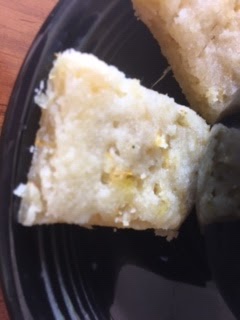
Eventually I'll try some dandelion flower pasta but the other day I decided to make a very small batch of shortbread cookies.  With the quarantine, ingredients are precious and shortbread is so simple with just a few ingredients.  I'm convinced that shortbread cookies are simply a socially acceptable way to eat large quantities of butter.  Because of that, it's good to know that they freeze beautifully when you know it's time to stop eating them.
Making shortbread is so easy.
Take a stick of butter out of the fridge to soften.
Go outside and pick 1/2 cup of the yellow petals of dandelions.
Now let's get to it!

Set oven to 300 degrees F
You'll need:

1/2 C butter
1/4 C sugar
1/2 C dandelion petals
zest of 1/2 lemon
1 t vanilla extract (optional)
1/2 C flour

In a bowl, cream together the butter and sugar.  Add dandelion petals, lemon zest, and vanilla and mix well.  Blend in the flour.
I placed the ball of dough between 2 pieces of waxed paper and rolled it to about 1/3 inch thickness, and transferred to a parchment covered pan.  It might be a good idea to chill it for 15 minutes now.  (I did not, and had to re-score after the bake.)
Score the dough into pieces and pierce with fork.  It can also be cut into shapes or pressed into a small baking pan or loaf pan.
Bake for about 30 minutes, until they are firm and just golden.
There are many optional ingredients, like chopped nuts, tiny chocolate, toffee, or butterscotch chips, dip them in chocolate, add a few pinches of lavender, mint, or anise hyssop - they're fun to work with, like these Confetti Shortbread Cookies, Ginger Shortbread, or these Gluten-free Lavender Shortbread Cookies. 
Hmmm... pretty obvious that I like shortbread!


Herbal Self-Care During Covid-19


Molly Sams
It's been a weird world. I know we are all going through it and I'm sure you are feeling as trapped and claustrophobic as I am. Here is what I've been doing to feel productive, take care of myself, and create an herbal routine to keep me going.

What I've been steeping

I know London fogs are not really considered an herbal tea but I do find it is a great alternative to coffee and helps me break up my routine. I use regular earl gray tea with a little vanilla extract and a bit of half and half or oat milk. I usually steep the tea in my French press as well. That way there is plenty of room for each tea leaf. It makes me feel a little fancier than my usual cup of black coffee. If I want to feel extra fancy I'll steep my earl gray with a pinch of lavender buds.

Again, I know coffee is not necessarily an herbal tea but I do sort of see it as one. Just like any other tea there are benefits to drinking it. However, drinking 25 ounces every day (my former routine) probably didn't really help matters. I do find drinking black tea every other day has helped the jitters. But back to coffee. With coffee I'll mix in a little Ceylon cinnamon to my beans as the water boils. Then I pour the boiling water over the beans in my French press (by the end of this you'll realize my intense love for my French press) and let it steep for about four minutes. It's a nice beginning to the morning and carries me into work.

So I drink both the fogs and coffee hot or cold but I enjoy my hibiscus and ginger tea as an iced drink. For this I take three healthy pinches of hibiscus tea, two to four slices of crystallized ginger (depending on the size), and let it cold-steep over night in, you guessed it, my French press. Then I either bring it with me to work or bottle it and put it in the fridge. I enjoy doing all of these because I still feel like I'm able to have a decent range of drink choices, I still feel a little fancy, and I get to save money.


What's been helping me look good

Getting through this has been pretty tough. I'm an essential worker nowadays at a credit union and I'm required to wear a homemade mask every day to work. The amount of heat and moisture that my mask creates has really wreaked havoc on my already sensitive skin. I've had to change my skin routine a little just to help it out.

I've started doing masks a couple times a week. I use a chemical peel mask once every two weeks to gently exfoliate. I only leave it on for about 3 minutes so I don't get any redness and it leaves my skin feeling refreshed and less flaky. The rest of the week I use gentle mud masques or sheet masks to moisturize.

I also use a healthy amount of hydrolauronic acid to help keep moisture in. Now that I live in Colorado my skin has become pretty dry and reactive. The hydrolauronic acid has seriously helped regulate the moisture in my skin.

Getting my green thumb going

To be honest, I've never been amazing at growing plants. I am a big fan of plants that I say good luck to after I put them in the ground. When you live in a tiny condo with little light, it's kinda hard to keep that philosophy. So I only have two little plants, lemon balm and peppermint. Caring for them, watching them grow in their containers, and soak up what they can of the sun has been a real positive aspect in my life.

If you have a nursery near by call in and see if they're open. Support a local grower while uplifting your spirits all at once.

Hiking and staring at wildflowers


I have been hiking a lot to stay sane. I wear a mask on the trails and luckily there aren't too many people when I hike. I have been able to see some amazing plants and views along the way. If you have hiking trails near you I would seriously suggest going. It makes you realize there is still more to the world than Covid.

Here's a couple photos to tempt you to hit the trails.


If you can, support small, local herb shops and businesses

I have been lucky enough to stay employed so I've been trying to support my favorite herb businesses when I can. When this began I re-upped on some of my favorite skincare products from Colorado Aromatics and splurged on some things I have missed from The Rosemary House. You can also cheer up your loved ones by sending them a gift certificate or a surprise package. If you can, spread some love. It can really help out.

Finally, read, read, read

Dive into a new (or old) herbal book and see what you can learn. I finished a First-aid herbal book and learned so much (good and bad). Now I'm moving on in my massive herbal book queue. Now that we are mostly just staying at home I think it is a great opportunity to learn more about herbalism, try some new recipes, and maybe find a new favorite herb.

This is rough and I know we could all use some help. I hope that if you try any of my recipes or rituals they help you get through this. Stay well and stay safe.

... and she had all these odd bottles and jars.

There's something I think about every autumn when there are piles of drying plants on most surfaces, jars of roots and seeds, and the dehydrator is running pretty regularly. I'll show you, but you have to pretend you don't see the dust. 

Many years ago my sister and I set out to begin our business, and a friend who had worked for a fairly well known TX potpourri maker agreed to teach us the basics of potpourri. 

 
Arriving at her home, talk turned to how she'd just moved in recently.  There were some rumors about the old woman who'd lived there before, and when they looked at the house there were odd bottles and jars full of roots and plants floating in liquid.  Plants hung from the rafters.  My sister and I were hanging on her words eager to hear more, but we found it way more interesting than our friend.  She dismissed the old woman as "a witch" and didn't want to talk of the rumors.

Now, I think I might be that old woman.  My house is like the inside of a 7 year old's pocket, except for the live frogs.  Beside me at this very moment is a small jar full of lavender buds from some of this year's crop and a Mason jar of mint tea. Also, the neighbor kids seem a little scared of me.

Beginning with this picture up near the ceiling - a foot long pine cone, a couple gourds, feathers and dried plants, and a twisted piece of vine.  But this is nothing.

Downstairs, many of the tinctures are lined up on this shelving that takes up one wall.

tinctures
Out in the sun room off the kitchen, there are jars of seeds, dried lemons, dried berries, and random herb equipment.
jars of seeds
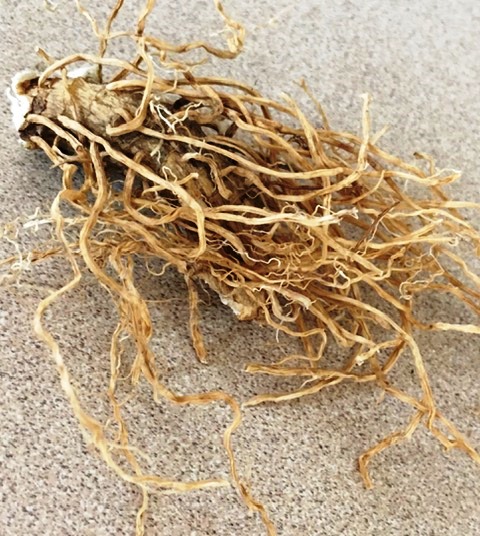
On the counter, a large, dried Solomon's seal root waits to find out where it will wind up.

solomons seal root
One of the cabinets holds the collection of old herb stuff (and other random or dear things).
antique herb packages and bottles
The table in the kitchen catches the bunches of herbs that come in to be dried.  Goldenrod, mint flower spikes, hyssop, jewelweed seeds, holy basil, and white sage dry perfectly on this surface as long as the piles are small.
kitchen table with dried herbs
The kitchen counter is never clear of stuff.  Medicine, experiments (that jar of candied kumquat rinds, for instance), and seasonings land here and stay way too long.
concoctions on kitchen counter
The dining room hutch catches slightly different items when she's lucky.  Usually the loose plant matter either stays in the kitchen or goes all the way down to the work room. So here are shells, stones, and pressed botanicals.
seashell, crystals oils and art
This is another shelving unit downstairs.  I need one more for the sake of organization.  Rows and rows of jars and bottles of all sizes from 3 oz to 1 gallon.
dried herbs in jars

This is only scratching the surface.  There isn't a drawer or shelf without some remnant of nature or some herbal project I'm working on.  A bottle cap holding a dozen beans, acorns, feathers, and rocks. a jar of fragrant salve - it all infuses my life.

Sometimes I wonder if someone was looking around my house without knowing me, what they'd think when they saw this wonderful cache of every herb, oil, or preparation I could ever want.  They'd probably be looking for my broom.